In his multidisciplinary works, Pablo Dávila takes as a starting point the traditional artistic media to question how they reflect the social construction and understanding of space and time. Davila's installations and exhibitions, the Mexico City-based artist excavates a space for interference and ambiguity through forms both pared-down and rich with an immediate sensorial experience.
Lives and works in Mexico City, Mexico.
His practice explores sentience and subjectivity through investigations in perception, space and time consciousness. His work takes many shapes-- encompassing video, electronics, light installation, photography, conceptual painting and site-specific interventions. His work traverses the space in between sensory perception and cognitive understanding. His poetic gestures trigger a questioning of our expectations in dealing with the passing of time, and the psychological lens with which we process events in our memory.
His work is informed by science, music, poetry, cognitive sciences and physical phenomena, so as to delve into notions of perception, the fleeting nature of time and historical interpretations.His works have been exhibited at, Aichi Triennale , Nagoya Japan; Musée d'art et d'histoire , Geneve Switzerland ; Museo Tamayo, México City; OMR, Mexico City, LAGO/ALGO, México City; Museum of Contemporary Art Monterrey MARCO, Monterrey; José Garcia, México City and Mérida; Kasmin Gallery , New York City; The Pill, Istanbul Turkey; Travesía Cuatro, Guadalajara Mexico.







Lorem ipsum dolor sit amet, consectetur adipiscing elit. Suspendisse varius enim in eros elementum tristique. Duis cursus, mi quis viverra ornare, eros dolor interdum nulla, ut commodo diam libero vitae erat. Aenean faucibus nibh et justo cursus id rutrum lorem imperdiet. Nunc ut sem vitae risus tristique posuere.
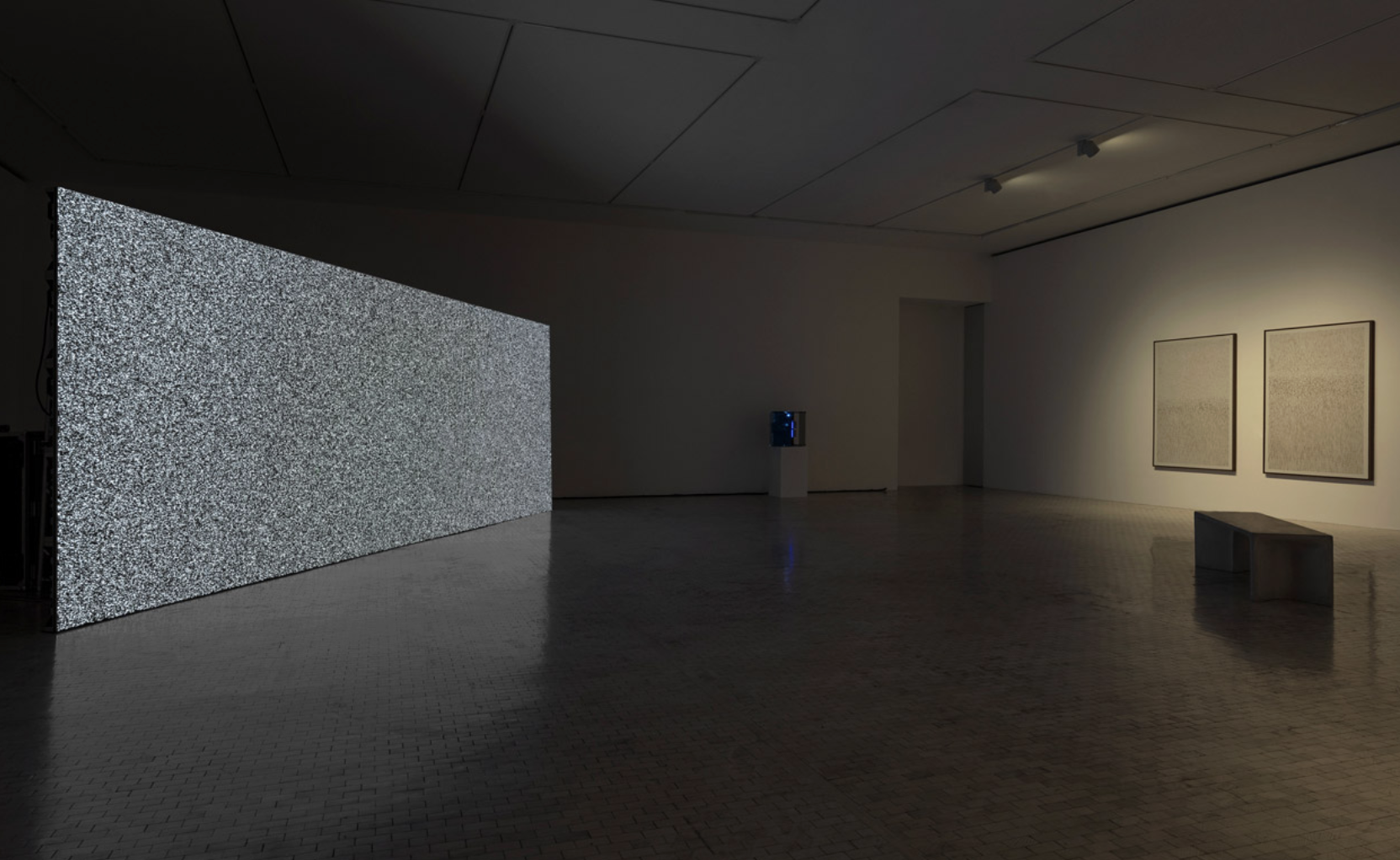
The installation by Mexican artist Pablo Dàvila, on display in the Landscapes Room on the Fine Arts floor, explores the nature of time. Time moves in one direction, Memory in another consists of two works: Senza Replica and Transference Harmonies. It builds on Gianni Motti’s Big Crunch Clock installation on the museum’s façade (recently acquired by the MAH) and the past exhibition Ten Billion Years.
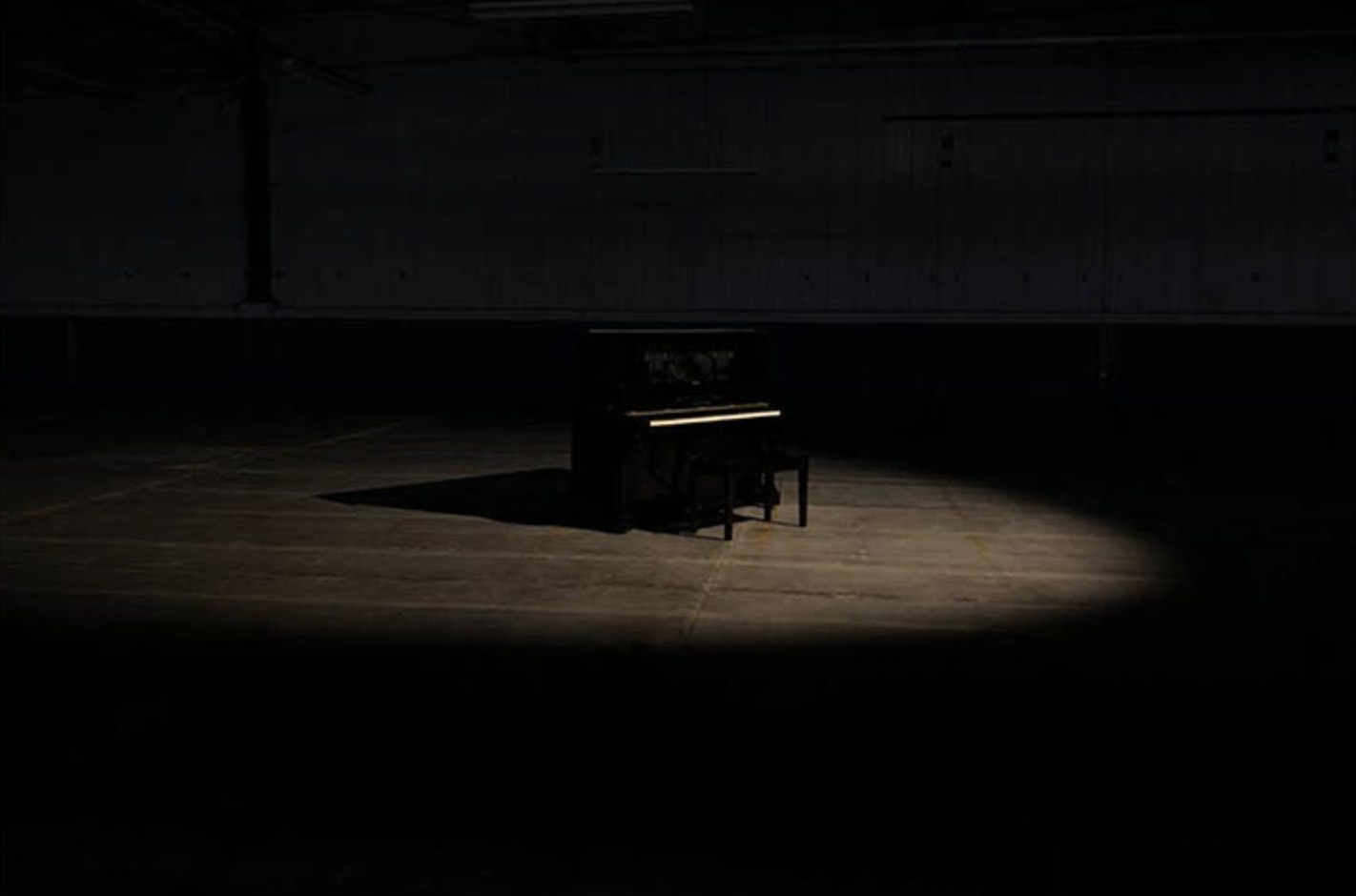
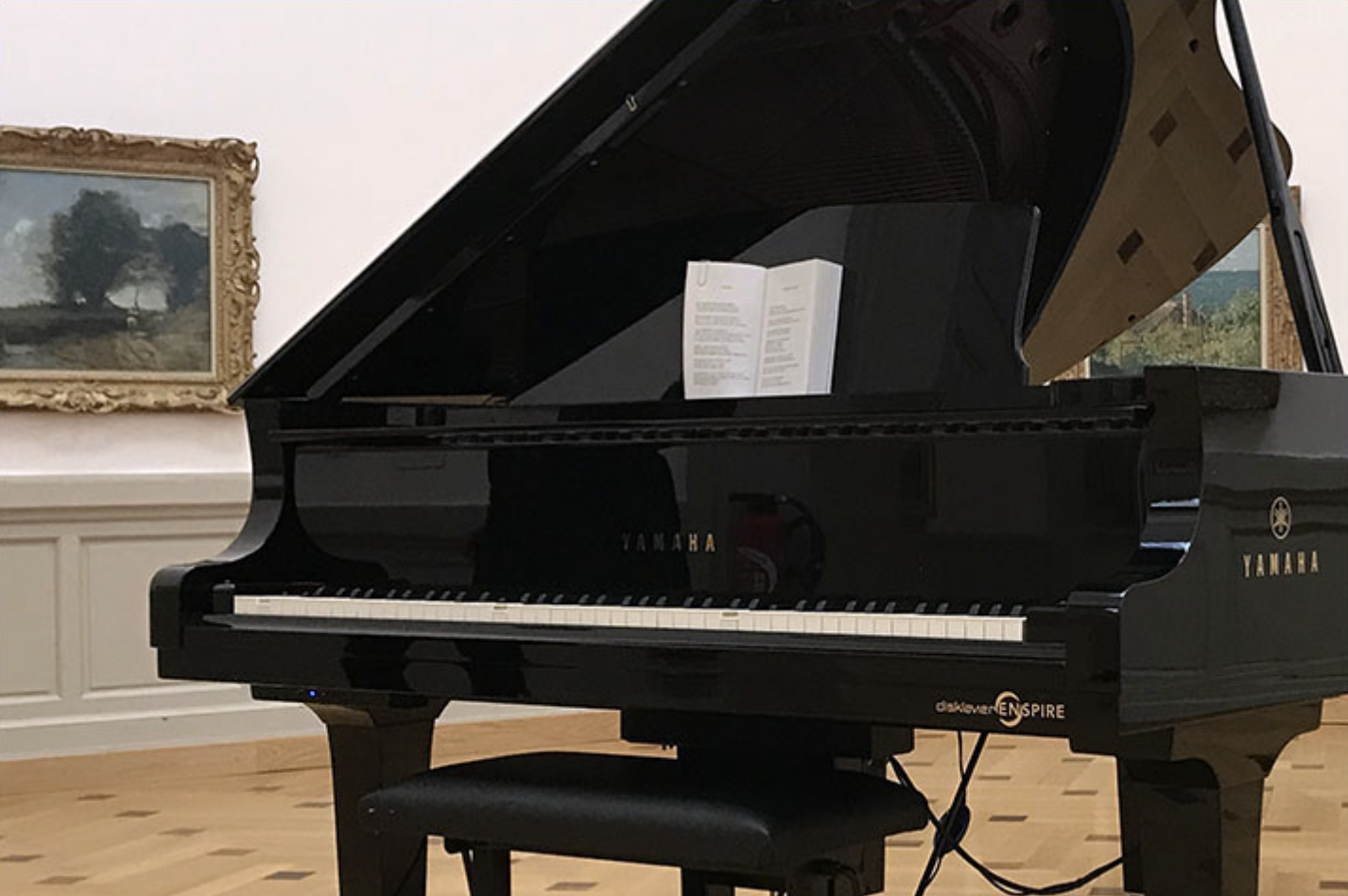
Senza Replica is a piano composition that explores the dizzying nature of time. It activates a musical clock via an electronic system. This system sets the 88 keys of a piano in endless motion through a sequence that plays all possible chords at a rate of one chord per second. This performance plays with the nearly limitless possibilities contained within an object, with the changing nature and limits of time, and with the uniqueness of the moment. As we listen to each chord—with no repetition—the immensity of time becomes apparent, while simultaneously the irretrievable loss of the present moment becomes a reality. Watching the piano in motion without human assistance evokes a sense of absence and prompts us to reflect on the notions of harmony, meaning, and emotion.
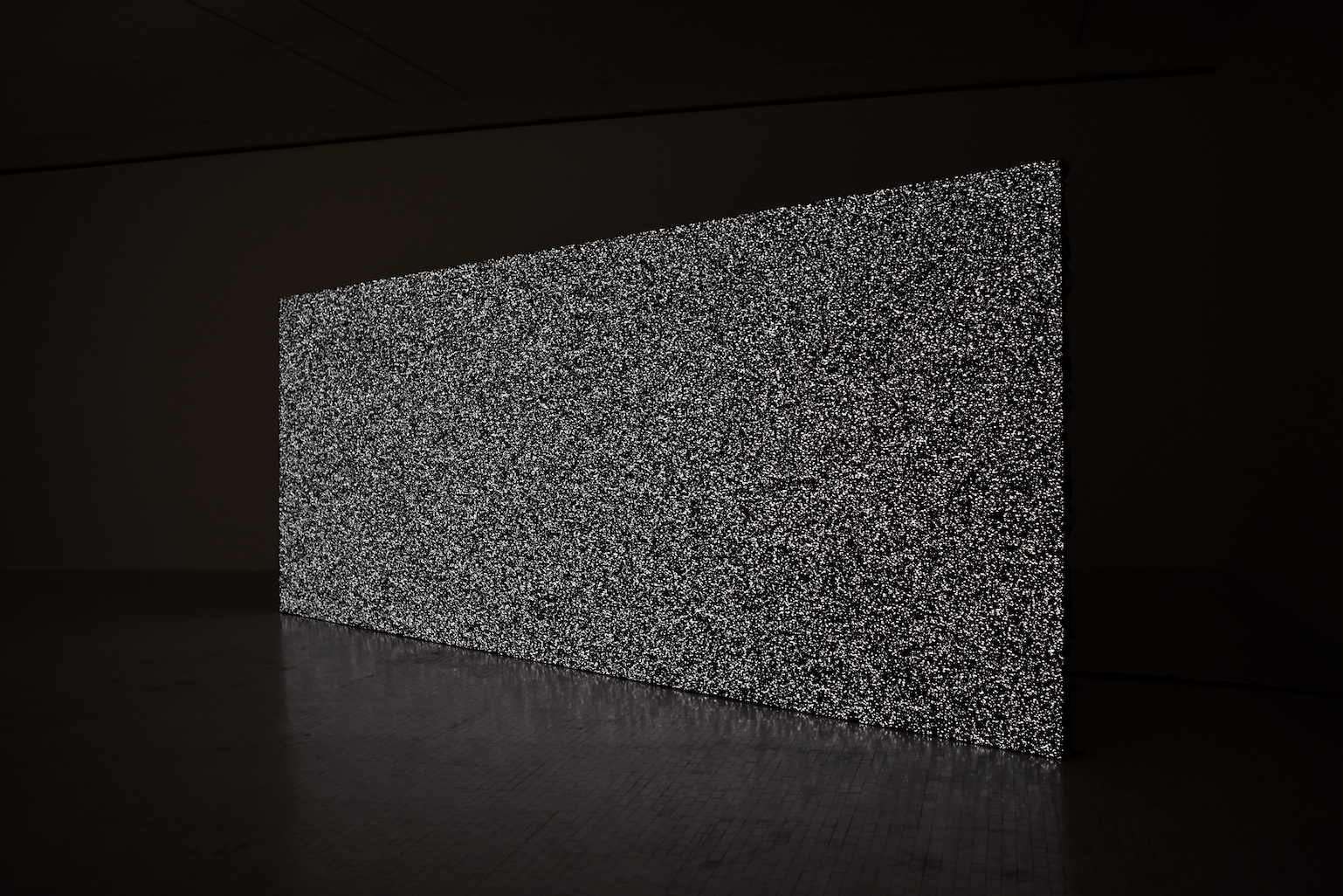
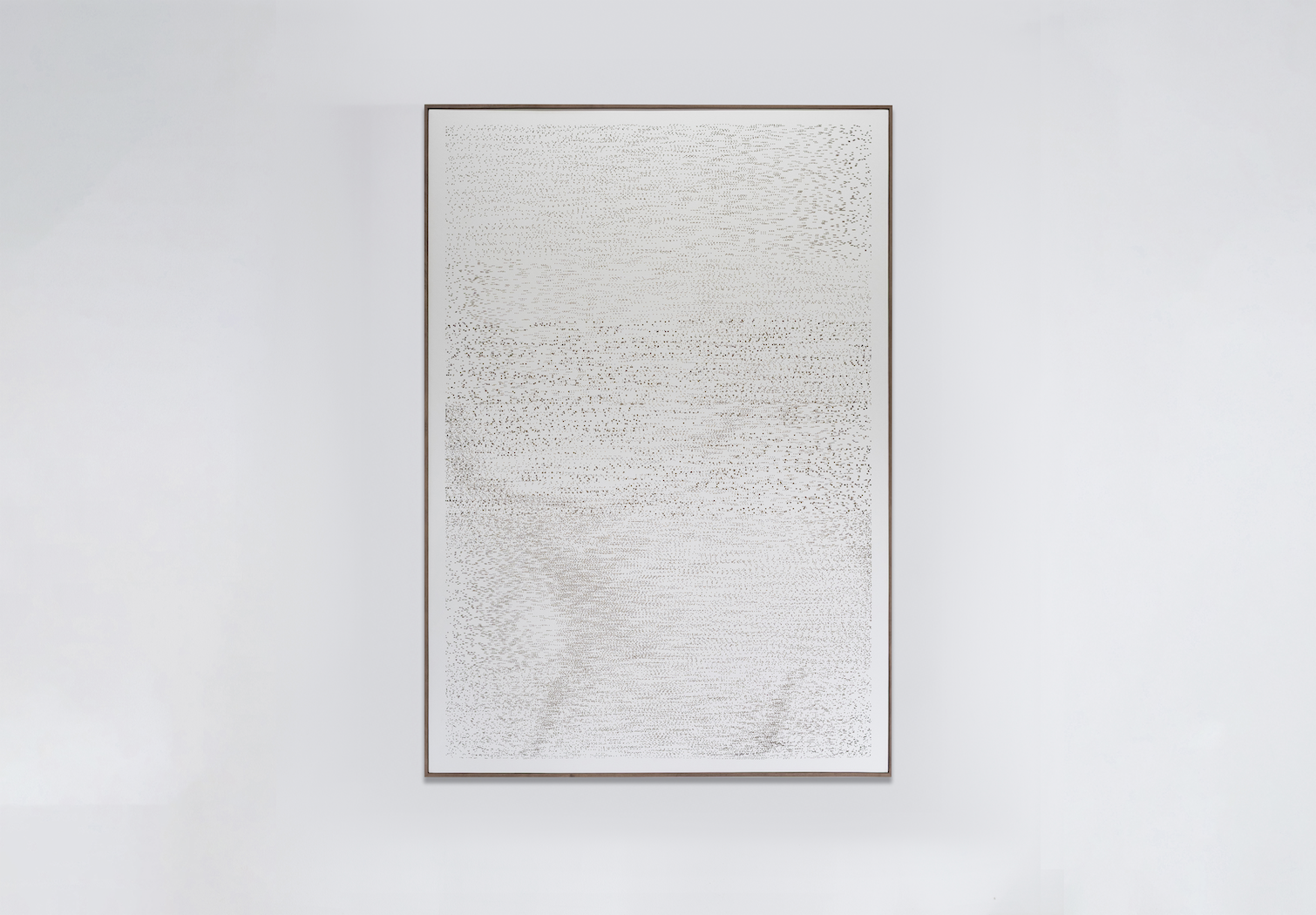
Also exploring the concept of time, Transference Harmonies is a universe born of random fluctuations and composed of a screen that interprets an astronomical amount of digital data through white, black, and two shades of gray. This data is processed by a computational system that creates a film capable of lasting billions of billions of years. The number of possible combinations contains more than 700,000 digits. The image resulting from this complex process appears at first glance to be visual noise. However, upon closer inspection of the screen, a series of patterns emerges, and recognizable images may appear. For Pablo Dàvila, “the universe is asymmetrical in time. The future is open and yet to be shaped. We can choose to influence it. Imagination is essential.” This piece explores a different path from the one through which we understand life, featuring a film that jumps forward in time every tenth of a second.


Lorem ipsum dolor sit amet, consectetur adipiscing elit. Suspendisse varius enim in eros elementum tristique. Duis cursus, mi quis viverra ornare, eros dolor interdum nulla, ut commodo diam libero vitae erat. Aenean faucibus nibh et justo cursus id rutrum lorem imperdiet. Nunc ut sem vitae risus tristique posuere.
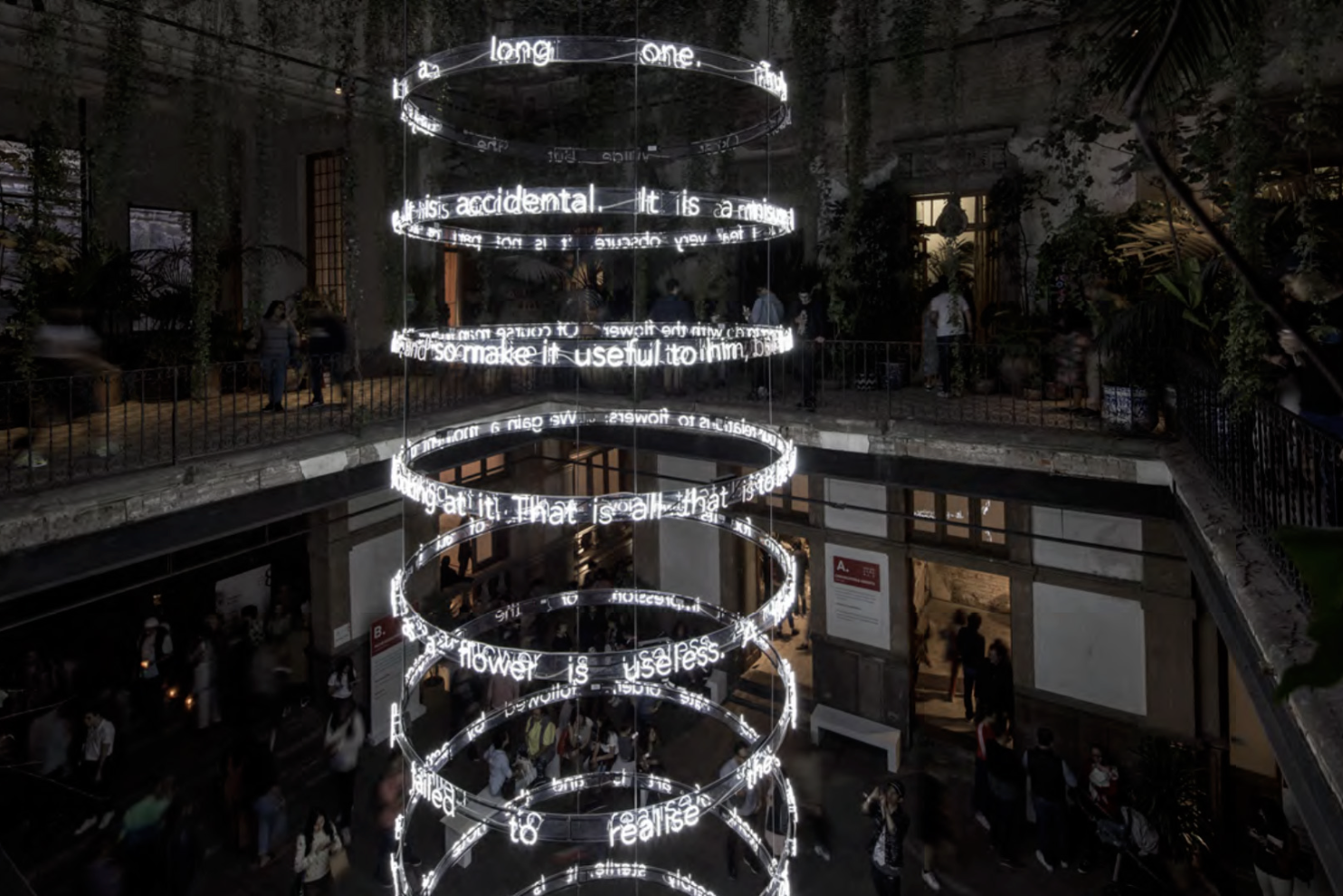
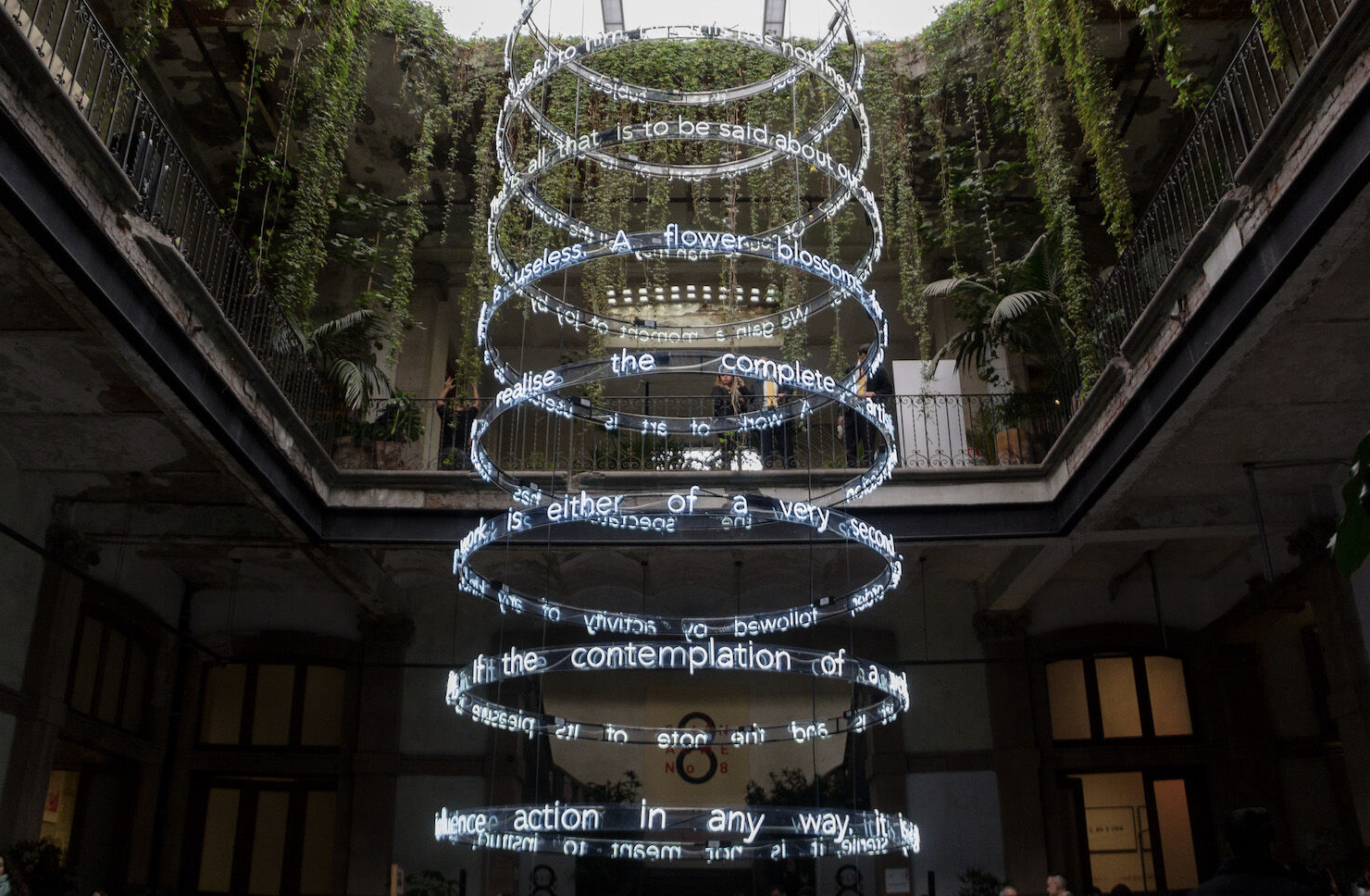
In the preface to his only novel, The Picture of Dorian Gray, published in 1890, Oscar Wilde proclaimed that “all art is quite useless”. Intrigued by the statement, Oxford student Bernulf Clegg wrote him a letter asking him for more details regarding that declaration. Wilde responded with a letter where he included some of his thoughts revolving around the function and the futility of art.
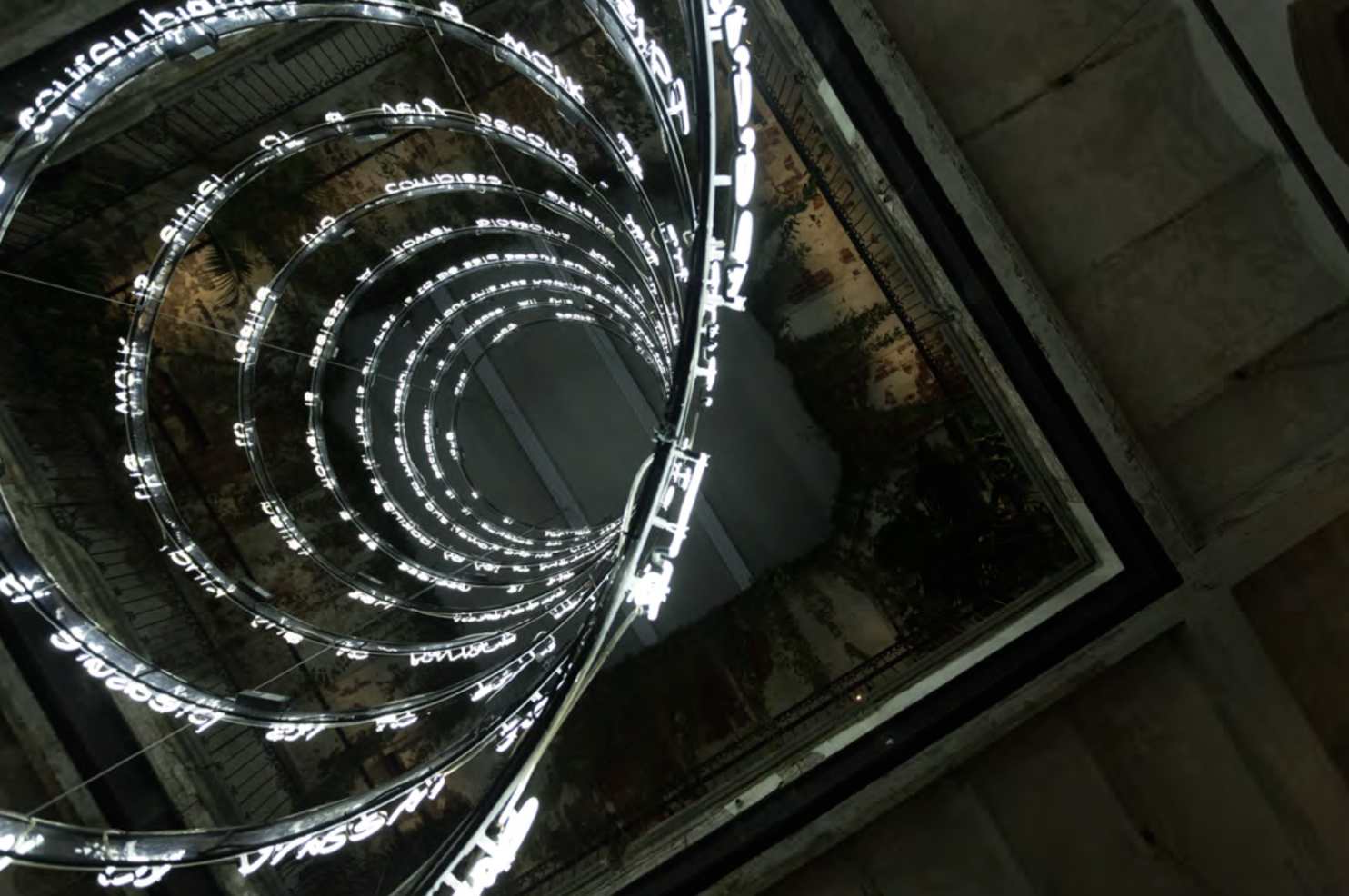
But The Subject Is A Long One is a textbased light installation featuring the letter Oscar Wilde would write to Bernulf Clegg. The text is only revealed when walkin around the work, as due to its dimensions and materials, the light and the text are transformed into space. Likewise, the spatiality transcends the realm of physicality, when becoming a testimony of the correspondence established by these two characters and that would continue for a few years. The text also reflects on a specific context held within the XIX century decay; a generalized skepticism that would permeate every sort of artistic expression.
Taking as a standpoint Wilde’s letter, a concrete poem of sorts was created featuring quotes by other writers, theorists, poets and artists, who would also think of art as rather useless space. The poem, which is a text with no beginning and no end, contains quotes by John Ruskin, Aristotle, Immanuel Kant, Marcel Duchamp, William Morris, Groucho Marx, Anish Kapoor, Michael Smith, John Everett Millais, Walter Benjamin, Ben Vautier and other authors. This investigation is an attempt to continue Wilde’s letter in different contexts and epochs and keep the correspondence with Wilde. After all, the letter’s final sentence is “‘But the subject is a long one”.


Lorem ipsum dolor sit amet, consectetur adipiscing elit. Suspendisse varius enim in eros elementum tristique. Duis cursus, mi quis viverra ornare, eros dolor interdum nulla, ut commodo diam libero vitae erat. Aenean faucibus nibh et justo cursus id rutrum lorem imperdiet. Nunc ut sem vitae risus tristique posuere.
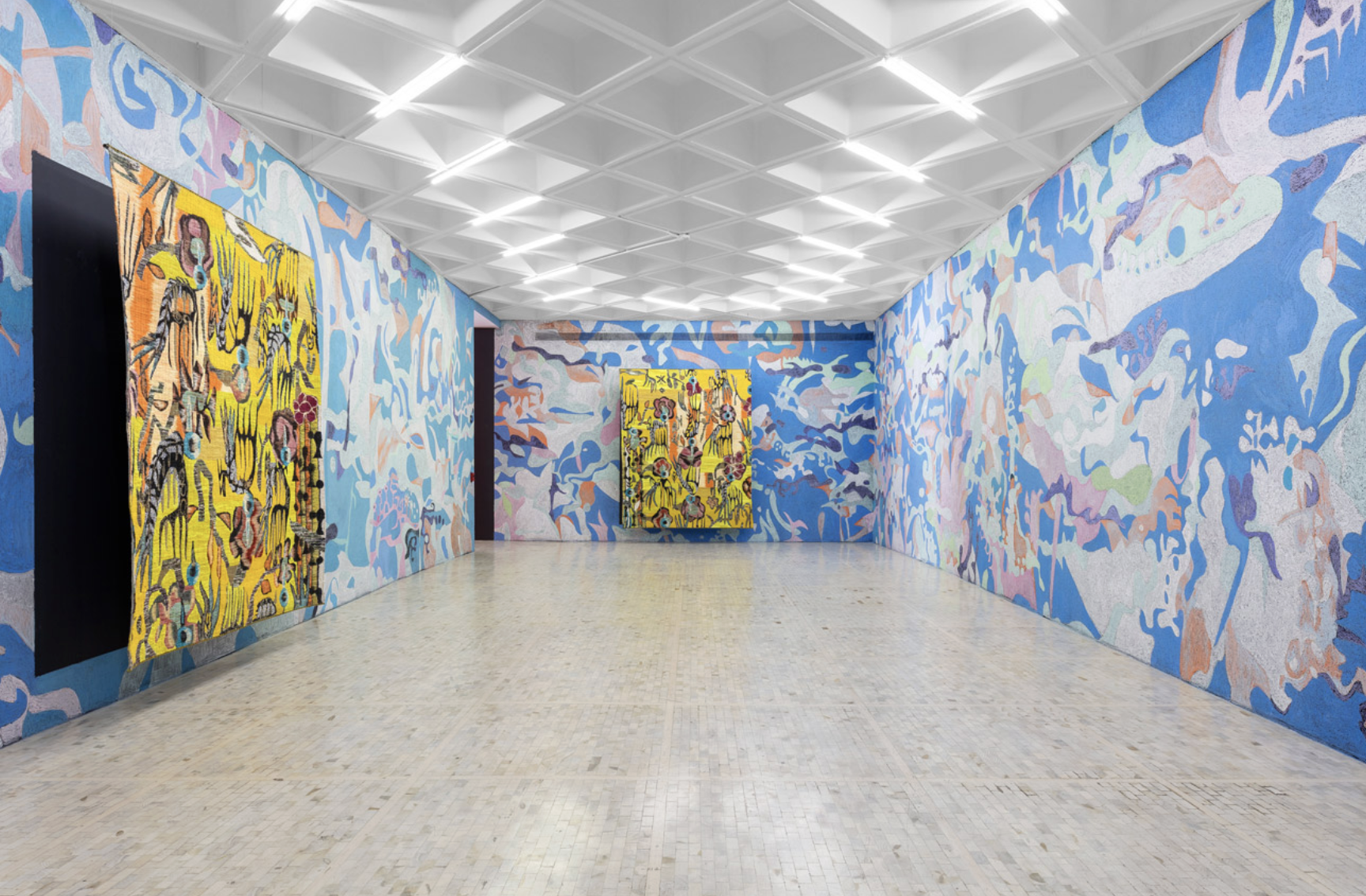
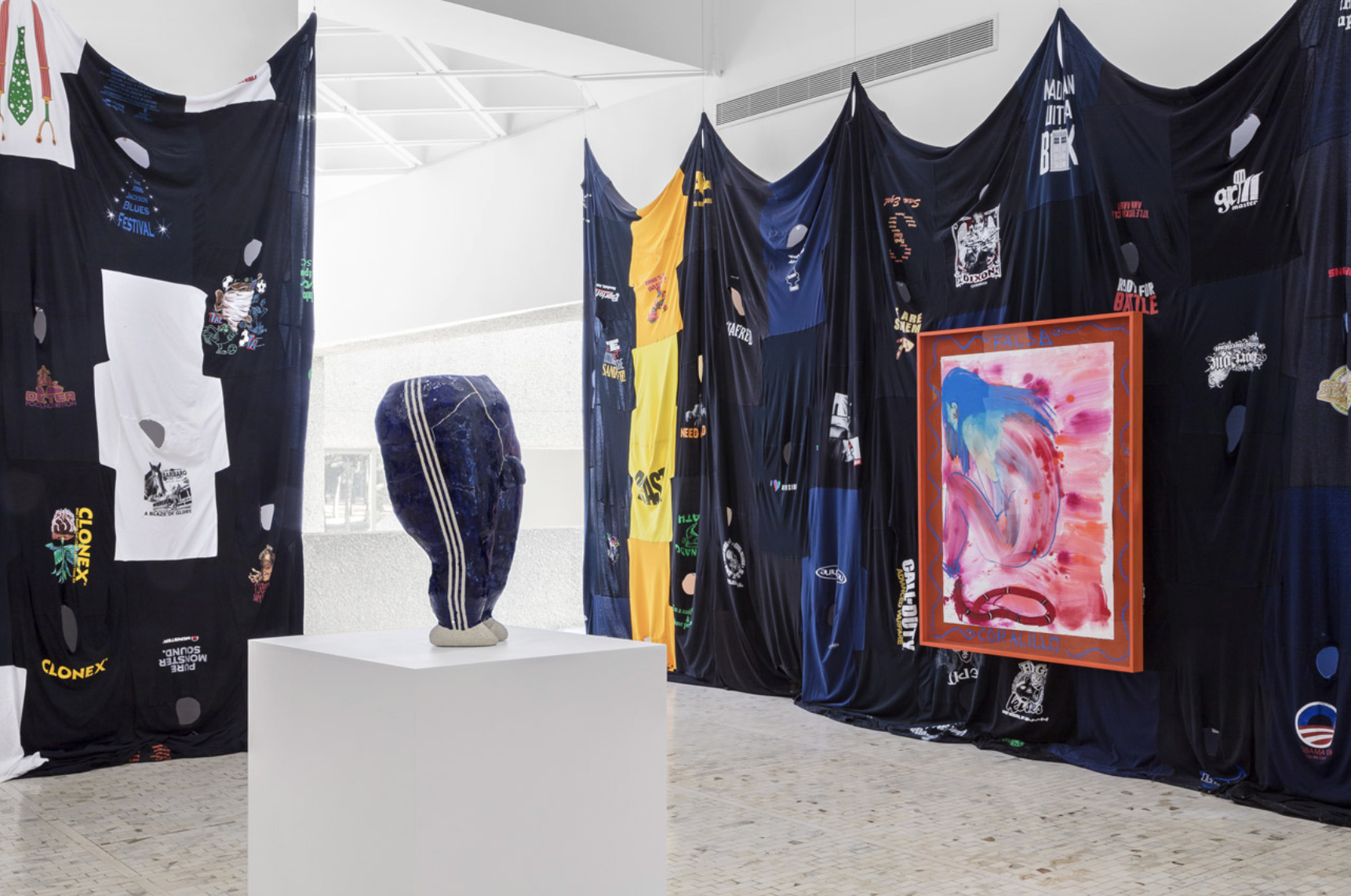
OTRXS MUNDXS is a group exhibition that examines and brings together the work of a diverse, multicultural group of more than forty artists working both individually and collectively in Mexico City. Through four thematic clusters (I. Capitalism and Domination, II. Seriality, Identity, and Obliteration, III. Entropy, Speculation, and Visualization, and IV. Body and Materiality), this exhibition presents recent work and special commissions that reveal urgent discourses representative of an artistic community that internalizes the paradigms and failures of late capitalism. OTRXS MUNDXS focuses on highlighting otherness: the participating works form artistic microcosms that either challenge preestablished and hegemonic conceptions or solidify alternative visions of what it means to make art in or from Mexico City.
OTRXS MUNDXS features mostly young or emerging artists—for some, this exhibition marks their first museum presentation. At the same time, it weaves these narratives together with a select group of more established artists who have been instrumental in shaping Mexico’s artistic landscape, both locally and internationally. Although this exhibition is a comprehensive survey of the current art scene, its aim is not to encompass all artistic practices or to serve as a universal exercise. In that sense, the exhibition has been curated with an awareness of its own limitations and with the intention of presenting one particular argument among many others that can be generated about contemporary art.
This exhibition is, first and foremost, a platform for art and artists; it highlights conversations that have been at the forefront of global artistic discourse and presents an important dialogue between local communities and Mexican artists with creators from Ecuador, the Dominican Republic, France, Brazil, Peru, and various cities in the United States. It also addresses the lack of representation and attention given to local communities by institutions, particularly for the city’s youngest generation of artists. OTRXS MUNDXS constitutes an unprecedented institutional response to the pandemic—a gesture that, at its best, foreshadows a post-pandemic otherness, a world in which equality, social and interspecies justice, as well as the well-being of the inhabitants of this complex city, are presented not as a radical idea but as an attainable reality.


Lorem ipsum dolor sit amet, consectetur adipiscing elit. Suspendisse varius enim in eros elementum tristique. Duis cursus, mi quis viverra ornare, eros dolor interdum nulla, ut commodo diam libero vitae erat. Aenean faucibus nibh et justo cursus id rutrum lorem imperdiet. Nunc ut sem vitae risus tristique posuere.
Duis cursus, mi quis viverra ornare, eros dolor interdum nulla, ut commodo diam libero vitae erat. Aenean faucibus nibh et justo cursus id rutrum lorem imperdiet. Nunc ut sem vitae risus tristique posuere.
Your inquire has been received and we'll be in touch with you shortly